
Winter Dry Skin: A Practical Care Routine for Face, Hands and Body
- 14 Nov, 2026
If your skin feels tight after every shower from November onwards, the weather is a big part of the reason. Cold outdoor air and heated indoor air are both dry, and skin loses water faster when the air around it holds little moisture. The good news is that most winter dryness responds to a few simple habits, and none of them require expensive products.
Why skin gets drier in winter
The outer layer of the skin works like a barrier: oils and natural moisturising substances hold water in, while the barrier keeps irritants out. Low humidity, hot water, harsh soap and wind all wear that barrier down. Once it is weakened, skin loses more water, feels rough and can start to itch or crack, especially on the hands, shins and lips.
Indoor heating makes the problem worse because warm air pulls moisture from everything in the room, including you. The US Environmental Protection Agency describes a relative humidity of 30 to 50 percent as generally recommended for homes. In a heated house in midwinter the level often drops below that, which you can check with an inexpensive hygrometer.
Change how you wash first
The quickest improvement usually comes from the shower, not the bathroom cabinet. The American Academy of Dermatology (AAD) recommends:
- Five to ten minutes in the shower or bath, using warm rather than hot water.
- A gentle, fragrance free cleanser used only where you need it, such as the armpits and groin, without working up a thick lather everywhere.
- Patting dry with a clean towel instead of rubbing.
- Shaving at the end of the shower, when skin and hair are softest, followed straight away by moisturiser.
Keeping the bathroom door closed while you shower also helps, because the steam raises the humidity in the room while you dry off and apply moisturiser.
Moisturise at the right moment
When you moisturise matters as much as what you use. The AAD advises applying moisturiser while skin is still slightly damp after bathing, after washing your hands and any other time skin feels dry. Damp skin holds on to more of the water that is already there, and the moisturiser seals it in.
Texture matters too. Ointments and creams add more moisture and are more effective than lotions, according to the AAD. A practical way to choose:
| Texture | What it feels like | Good for |
|---|---|---|
| Lotion | Light and runny, absorbs fast | Mild dryness, daytime, larger areas in mild weather |
| Cream | Thicker, comes in a jar or tube | Most winter dryness on the face and body |
| Ointment or balm | Greasy, sits on top of the skin | Very dry or cracked patches, hands at night, lips |
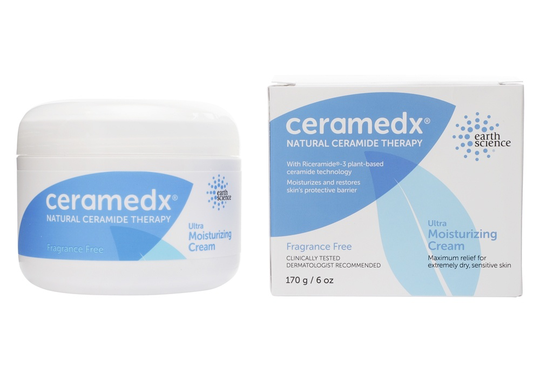
On the label, look for ingredients the AAD lists as helpful for dry skin, such as glycerin, hyaluronic acid, lactic acid, lanolin, petrolatum, shea butter, dimethicone or jojoba oil. Many barrier creams also contain ceramides, lipids that occur naturally in the skin's outer layer. A thick, fragrance free body cream such as Ceramedx Ultra Moisturizing Cream, which combines plant based ceramides with fatty acids and cholesterol, is one example of this type.
Plant oils can work well as a final layer on top of a cream, especially on the face at night or on dry elbows and heels. If you are curious about one of the most popular options, read our guide on whether argan oil is good for skin. Apply oils to damp skin or over a moisturiser, since oil on its own adds little water.
Hands, lips and face need extra attention
Hands take the most punishment in winter: frequent washing, hand sanitiser and cold wind. Keep a non greasy hand cream next to every sink and in your bag, and apply it after each wash. Wear gloves outdoors in cold weather and rubber gloves for washing up. For cracked knuckles, a thick layer of ointment under cotton gloves overnight is an old trick that many people find helpful.
Lips have almost no oil glands of their own. Use a lip balm or petroleum jelly regularly, and try not to lick your lips, which dries them further as the saliva evaporates. The AAD suggests switching to a different balm if yours stings or tingles.
The face often tolerates active ingredients less well in winter. Retinoids, exfoliating acids and alcohol based toners can all sting on dry, irritated skin. If your face feels raw, cut back on actives for a while and focus on a gentle cleanser and a richer cream. You can still use a vitamin C serum if it suits you; our guide on how to use vitamin C serum explains how to layer it. Do not drop sunscreen in winter either: the AAD recommends a broad spectrum sunscreen with SPF 30 or higher on exposed skin, and snow reflects sunlight.
Small changes around the house
- Run a humidifier in the bedroom at night, and clean it regularly so mould does not build up inside.
- Wear soft layers. The AAD advises loose cotton clothing and a cotton or silk layer under wool or polyester, which can rub and irritate dry skin.
- Choose fragrance free over "unscented". The AAD notes that unscented products may still contain chemicals that can irritate dry skin.
- Check your laundry and soap. Heavily fragranced detergents and deodorant soaps are common triggers for itchy winter skin.
- Keep a routine. Moisturising once in a while does little. Twice a day, every day, plus after hand washing, is what makes the difference.
When to see a doctor or pharmacist
Winter dryness is common and usually harmless, but it is not always just the weather. The AAD notes that dry skin can be linked to conditions such as atopic dermatitis (eczema) or psoriasis, and to other health problems. Speak to a doctor, dermatologist or pharmacist if:
- your skin stays dry, itchy or cracked even after a few weeks of careful care,
- cracks bleed, weep or look infected,
- itching keeps you awake at night,
- a product burns, stings or causes a rash, or
- you are unsure whether a cream is suitable for a baby, during pregnancy or alongside a prescription treatment.
A pharmacist can also help you choose between emollients for very dry skin and advise on anti itch creams, which the AAD warns can irritate very dry skin if you pick the wrong one.
Common questions
Can drinking more water fix dry skin?
Staying hydrated is sensible for general health, but dry skin in winter is mainly about water escaping from the outer layer. Gentle washing, moisturising and higher indoor humidity have a more direct effect.
Do I need a separate cream for my face and body?
Not necessarily. Many people use a richer cream on the body and a lighter, non comedogenic one on the face, especially if they are prone to breakouts. If one fragrance free cream suits both, that is fine.
Start tonight with the easiest change: a shorter, cooler shower followed by a cream on damp skin. Give it two weeks before judging the result, and add a humidifier or an overnight hand treatment if your skin still feels tight.